Career lessons from Reni Odetoyinbo — Global content creator & finance educator
When a young person buys her first home at 23, it sparks curiosity. You don’t get to hear that every day. But that’s exactly what Reni Odetoyinbo, also known as the “Money Girl," did.
Fast forward to less than six years later, and she’s built an investment portfolio worth $400k. "Impressive" doesn't begin to capture the scale of what she’s accomplished.
I’ve been following Reni’s journey online for a while, and I just knew I wanted to hear more about her career. So, here we are.
I won’t pretend our conversation wasn’t heavily centered on money. But honestly, who hates talking about money? Not marketers.
Reni shares an interesting and practical outlook on investing, financial discipline, and how young marketers can manage their finances sustainably.
If you’re looking for lessons on building wealth early, managing your income intentionally, and thinking long-term about financial independence. Reni’s story will inspire you to start taking control of your income.
You've had an interesting journey. Quitting your 9-to-5 to start a multi-six-figure business and building a $400k investment portfolio. Give us a little backstory of how it all began.
I started my career in 2015 when I was in university. During that time, I worked at a bank, and by 2019, I had transitioned into marketing there. I was doing their content marketing, social media marketing, and various marketing strategies. While doing that in 2020, I bought my first house.

Around that time, people started asking me questions about how I managed that. I realized this was something I could create content around since I already enjoyed marketing and content creation. So I started making videos. People resonated with them, and one video led to another. Before I knew it, what began as an experiment turned into my full-time job.
For those who don't know me, I make content about all things financial literacy. I educate people on how to be more investment-savvy, teaching them about investing, budgeting, and saving.
I quit my job in 2021, so it’s been almost five years full-time. It’s been an incredible journey, and I’m very happy with how it’s unfolded so far. I’ve had the opportunity to work with multinational companies in Nigeria, Canada, the US, and across the world.
Going by your experience, you started managing your finances at an early age. What did you do well, and what would you change if you could?
What I did well was listen to my dad, Bode Odetoyinbo. Thankfully, I have a dad who is very financially literate. He learned about financial literacy in his 30s, so he said that his kids wouldn't have to wait that long. He wanted us kids to learn a bit earlier. You could call him my mentor, so I wanted to do the same things that he does and follow his lessons. I basically want to live a life similar to his.
Back then, one of the good things I did was to automate my savings. For example, I automated my investment so that even if I didn't have the motivation or discipline to invest, it was still investing on my behalf.
One key thing I could have done better is budget earlier. I always tell people that the basics of financial literacy are tracking your savings, income, and expenses. But most people don't do it. I didn’t—so that's one thing I could go back to change if I could.
💡 Also read: Career lessons from Jessica Tee Orika-Owunna — BOFU & Product-led Content Specialist
In recent times, many marketers are switching their mindset from saving for a rainy day to investing. What's your take on passive investing versus active investing?
It depends on you as a person, what you value, and your personality type. For some, active investing works. But for the actual majority of people, they should probably stick to passive investing. For those who don’t know, active investing is when you actively look at the best stocks right now, buy more, sell some, etc. Whereas passive investing is more like, “I'm just gonna sit back, buy this fund, and let it grow.”
There are multiple ways to make money. You can make money through active and passive investing. I honestly think it just depends on your personality type. I used to be a very active investor because I had a lot of time. Then, I was very eager to do it, but now I don't have the time to research stocks and do too much.
I am a passive investor at this point because I'm building my business. That has become my main focus right now.
What are the biggest money mistakes you've seen young people make, and how can they break out of those?
One big mistake I see with anyone who has variable income—meaning some months income is up and some months it might be down—is that people spend as if their income were always up.
Let's say you make two million naira one month. You're super excited about that, but then you increase all your other expenses to match someone who makes two million naira per month. But we don't know that you will make the same money next month. Maybe you'll make 300,000 naira next month, so you can't base your income on just the high months. It's just not sustainable in the long run.
I also see a lot of people investing in their businesses, but there's no clear return on investment. Some take a course, buy equipment, or pay for software because they think doing so will help their freelance marketing business. But there’s no tangible outcome of any of these things they do.
When I look at my business, I like to see everything I do, how much it costs to do XYZ, and the actual outcome. Many people look at their businesses holistically, which is good, but they also have to view them in silos.
Say you hosted a live event with your friends and your community members, and you invested this much in it. What was the outcome of this event? Yes, you can afford it partly because your business can cover the expenses. However, from the event you hosted, did you make a profit or a loss?
As creatives, sometimes we don't like looking at the numbers. Getting deep into those numbers is important, as it helps you clearly assess whether what you're doing is actually effective.
You run some programs such as “Don’t Go Broke Trying” and “Don’t Go Broke Collective." What are they about?
I didn’t want all my income to be based on having a big client. As a content marketer and content strategist, I work with big brands.
Let’s say a brand wants to pay me $5,000 for a gig. I have no way of knowing whether the payment will come in a month or be delayed. First of all, they may take a long time to pay. Secondly, it may not happen monthly.
In 2025, I decided to diversify my income instead of relying on big clients, so I started the “Don't Go Broke Collective.” It’s an accountability group I run, and right now there are about 200 people in the group. Every two weeks, we meet; I host group coaching calls with them, and we talk about a specific topic. I teach them about investing to help them grow their financial literacy. I also bring in experts to speak to them every single month.
That's another source of income I have because it's a paid group. It runs biweekly, and since it's a subscription model, members can join or leave whenever they want. So that's one type of business model that I've implemented
The second one you mentioned is “Don't Go Broke Trying.” It’s a podcast I've had for the past few years. It initially started as a podcast, but people wanted a live in-person event where everyone could talk and mingle, so I decided to launch the “Don't Go Broke Trying” live events.
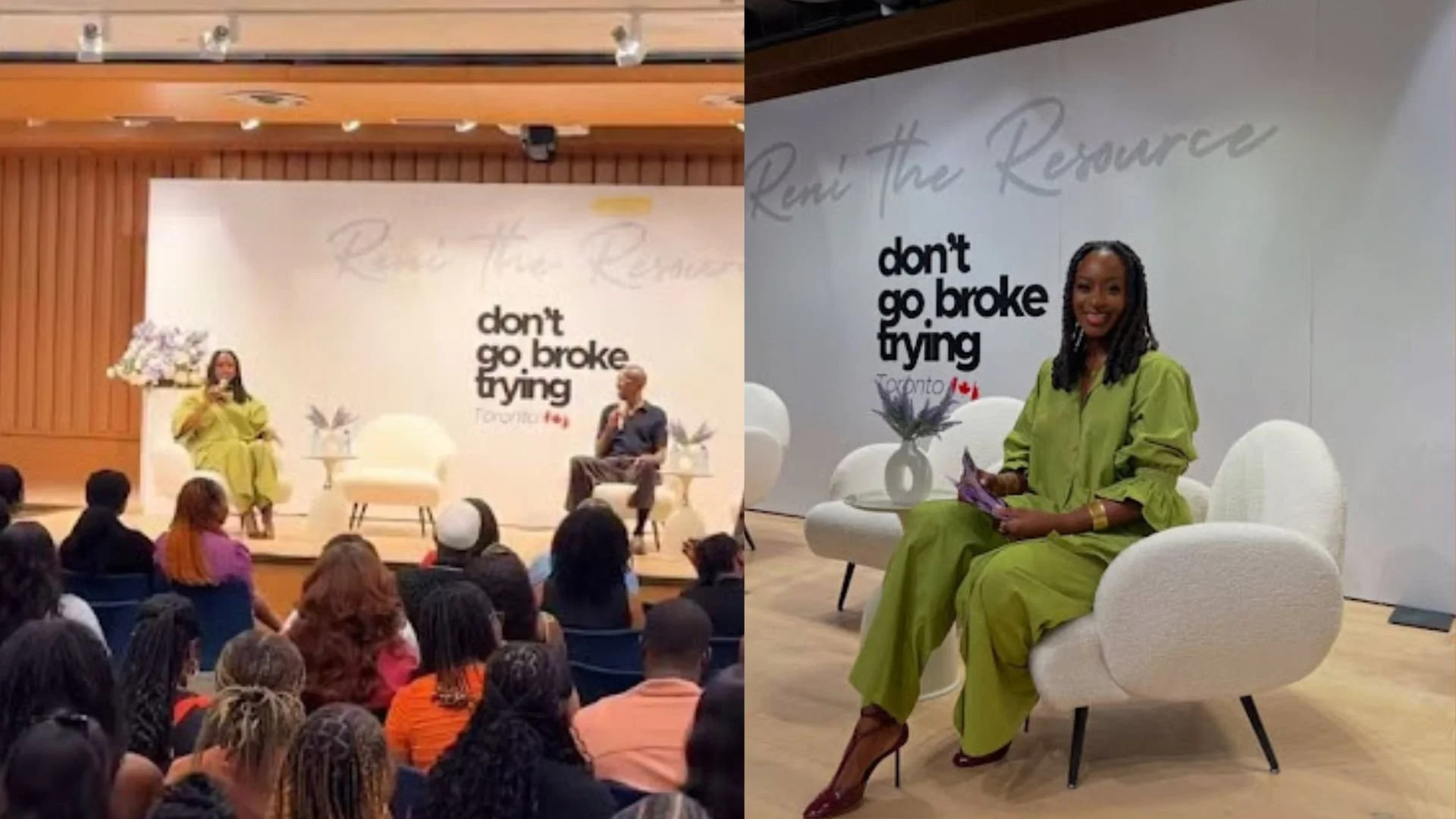
So far, I've had two in Toronto, one in New York, one in Lagos, and one in Abuja. It’s been pretty great and just another way to diversify my income in addition to having my brand deals.
You're ranked among the top 25 finance content creators in Toronto. What role did personal branding play in this achievement?
I would say that personal branding is everything. I always tell people that if you don't think you have a personal brand, trust me, you do. It's just that you're not in control of crafting it. If you want to be known for XYZ, then you have to start living like someone who is XYZ.
For example, I want to be known as the money girl. There are many facets of my personality—I like finance, travel, and other things. But when I started my brand, financial literacy was what I wanted to be known for. So, that's how I crafted my brand. It showed up in my posts online; it shows up when people meet me in person, too.

If someone saw me at the club balling or spending millions of naira on bottles, it wouldn't match up with my brand persona. Your personal brand has to live not just in the online space and what you present online, but in the way you live.
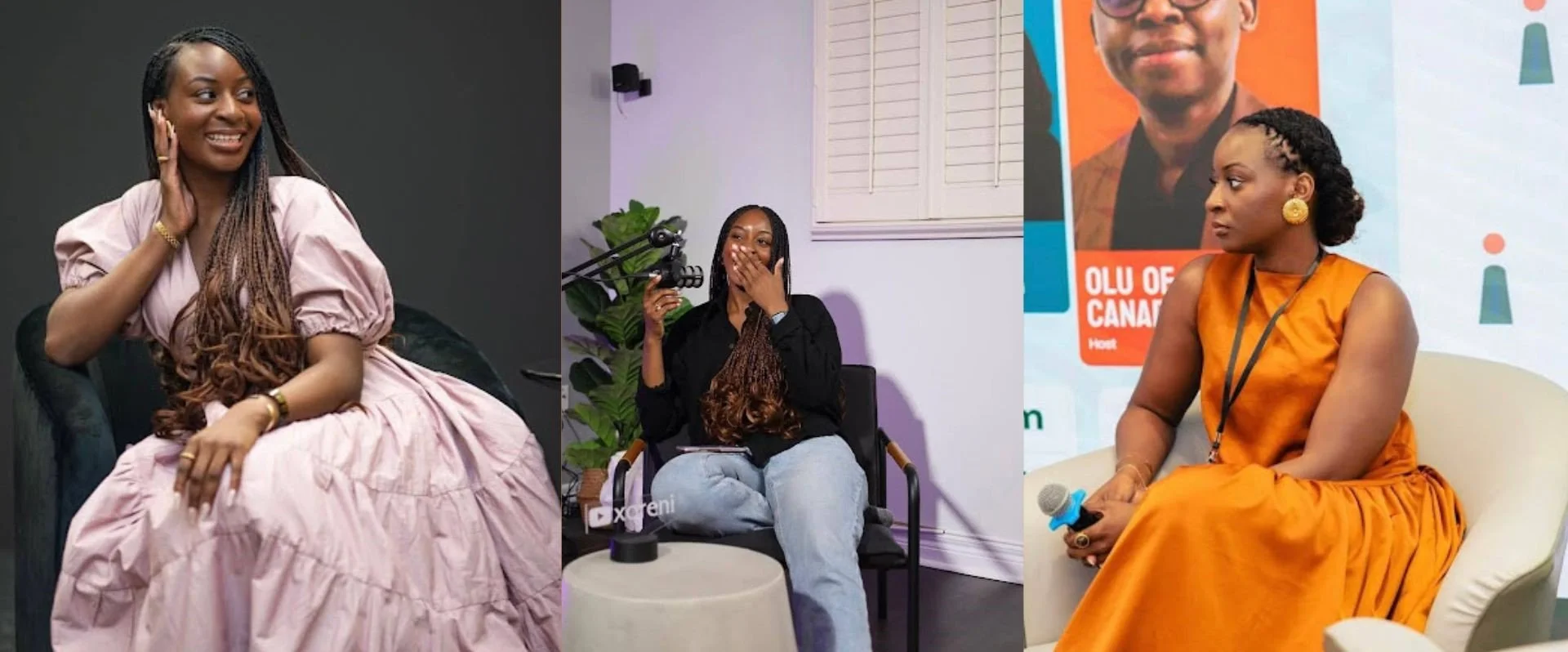
It’s the same thing when I'm talking about money. I have to present myself well and dress well so that it all makes sense. That has helped me to become one of the top 25 creators in Toronto and also attract lots of brand deals because, again, when you ask someone if they know any people who are always talking about money, whom you can use for a brand campaign, Reni is going to come to the top of your mind.
💡 Also read: A guide to building a personal brand that attracts global opportunities
The creator economy is set to be bigger in 2026. What's your advice for marketers—freelancers or 9-to-5ers—who want to become creators too?
As marketers, you have all the skills it takes, so don't feel overwhelmed. You know how to tell stories; you know how to turn a message into something compelling. Now, all you have to do is put it out there for everyone to see.
I would say 2026 is yours for the taking. Use every skill that you have now and adapt them to your personal brand. Maybe you don't want to be a front-facing creator who’s the face of a brand. You can also explore UGC creation (user-generated content) that doesn't depend on you having a large brand.
There’s someone in my Don’t Go Broke Collective community who wanted to make some extra money. So she started creating finance content and recently secured two deals worth $5000 each. She doesn't have more than five thousand followers yet. So there are ways to make money in content without you having to be the face of the brand.
Lean into the skills you already have, because as a marketer, you're basically made for this creator economy space.
💡 Also read: 2026 marketing trends: 6 expert marketers share what to expect
In the age of AI and an evolving job market, what other avenues can marketers explore to build wealth sustainably?
It's all about leaning into what your audience wants. I know nobody wants to hear that, but it's true. Audience behavior is changing; new trends crop up all the time, so you have to figure out right now what you’re good at and what you enjoy. Then figure out whether your audience also wants this same thing.
I truly believe you can make money in whatever you can do well. Also, there are many different ways to make money. For example, I have my brand deals, a community I built, speaking engagements, and other affiliate income. While there are so many different ways to make money, it's hard to tell somebody, “This is the exact way to make money.”
It depends on what you are interested in and what you are good at, but there has to be a third part—figuring out whether your audience is interested in what you’re good at.
It's okay to start things, try them out, see if you like them, and see if people are responding to them. If they're not, it's okay to pivot. I used to create digital products at one point, but I stopped. I had one-on-ones at one point; I stopped doing them. Don't feel like you're a failure. If you try something and it just doesn't bang, you move on to the next thing.
We’ve been talking about money nonstop. Tell us what you do for fun, and one thing people don’t know about you.
I like to travel; that's how I relax, and so far, I’ve been to 46 countries. I love to travel, explore the world, and enjoy my life.
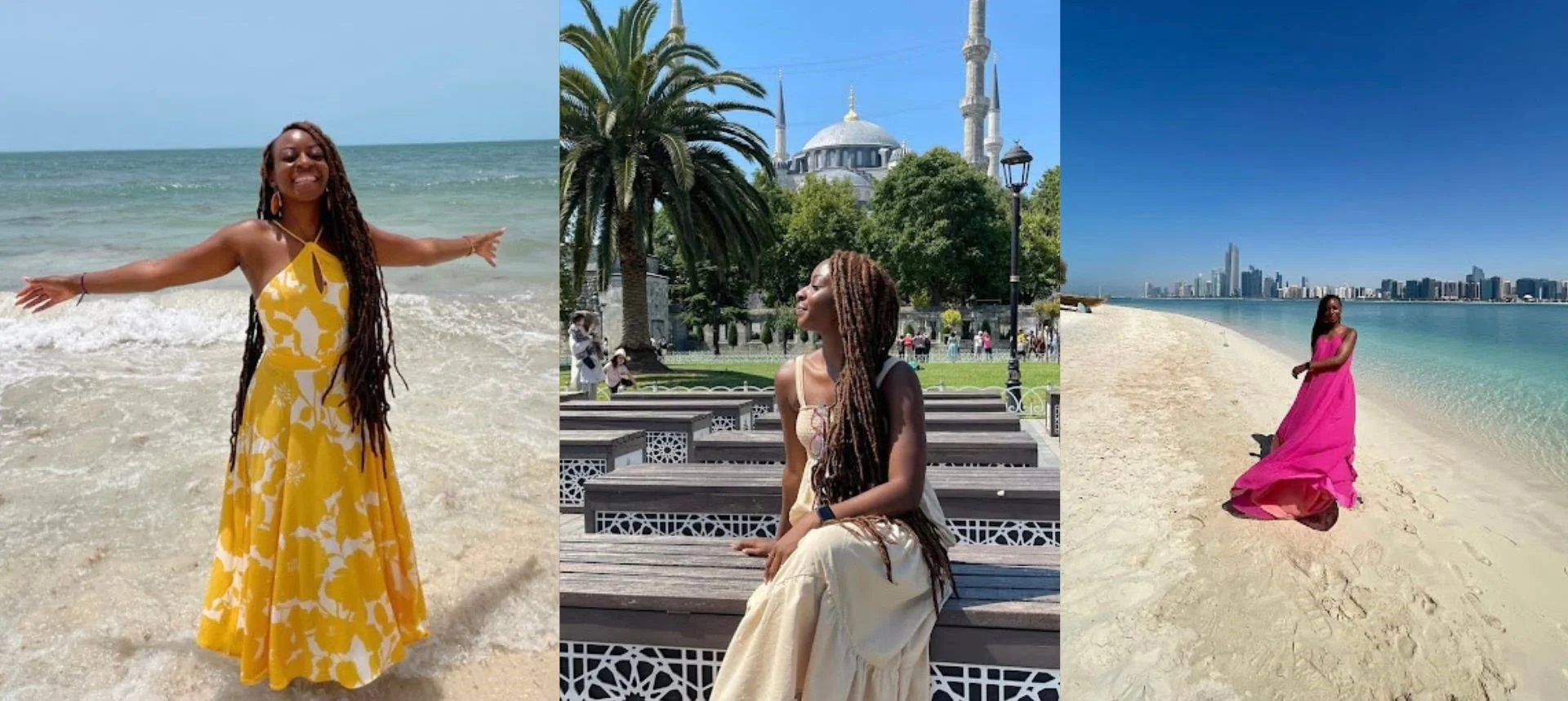
Something people don't know about me is that I have three passports—my Canadian, UK, and Nigerian passports—that allow me to travel a lot more easily.
For marketers with a low-income background in developing economies, how can they build the sort of financial independence they really want?
My advice is to know that you have a marketable skill that's in demand, so it's all about you. It's on you to expand beyond whichever continent or country you're based in. You can work with clients who are in Canada, in the UK, or in the US, who can pay you in a higher currency, which can help you go much further than you are right now.
To achieve this, first hone your skills. Second, find companies that have already worked with people in your region. Third, find a mentor who has already done it. Honestly, that is the easiest way because they can give you the exact blueprint that will save you a lot of time.
Many people don't want to pay for mentorship. But trust me, paying for mentorship is one of the most valuable things that you can do, even if you have to save up for it. You can spend years stressing over why something isn’t working when a mentor could quickly tell you exactly what’s wrong and what you need to do to fix it.
💡 Also read: 6 tips to land international remote marketing roles