
How I built a B2B content writing career in one year (and what almost stopped me)
I landed my first marketing job within two months. It was the kind of milestone people celebrate on LinkedIn. What they didn't see was how much of that first year I spent questioning whether I belonged.
I felt like everyone else had marketing figured out except me. As I grew in the field and connected with other marketers, I realized those feelings were more common than I thought.
In this article, I'll share how I built a B2B content writing career in one year, the lessons that shaped my growth, and the challenges I had to overcome along the way. I hope this helps you navigate your own path.
Table of content:
1. Get to know me
2. What does it mean to build a successful B2B content writing career?
3. How I landed my first job in marketing
4. Skills that increased my value and income as a B2B content writer
5. Challenges I encountered and how I navigated them
6. How to build your B2B content writing career in 12 months: a practical blueprint
7. Final thoughts
8. B2B content writing FAQs
Get to know me
I'm Ucheawaji Dandison, a content writer for SaaS and B2B brands. I started writing in 2019, mostly because I enjoyed it. In 2025, I decided to turn it into a business. I wanted to build something of my own, earn an income, and grow into a writer people would trust with their brand stories.
At the time, marketing wasn't even on my radar. I had no idea this decision would lead me into the world of SaaS, content strategy, SEO, and B2B writing. Yet since then, I have built a growing content writing career while navigating life as a pharmacy student.
Before I explain how I did it, let’s clarify what "building a B2B content writing career" means, as success in this field involves more than just getting paid to write.
What does it mean to build a successful B2B content writing career?
When I first started, I thought having a successful content writing career simply meant getting paid to write. While that is important, it involves more than a paycheck. It’s about building a system that helps you deliver value, attract opportunities, grow your skills, and build a reputation in your niche.
Over the past year, my definition of success has evolved. To me, a successful B2B content writing career now looks like:
Having paid clients or a full-time role. You know you’re building a business when someone is willing to pay for your skills. Paid opportunities, whether freelance or full-time, validate your ability to solve real business problems with content.
Consistent workflow. One-off projects are exciting, but consistency is what creates stability. For me, success became more about having a steady stream of work, referrals, and opportunities in my pipeline.
Finding a niche. Early on, I tried to be the writer who could do everything. Over time, I realised specialization brings clarity. A niche helps you build expertise, attract better opportunities, and stand out in a crowded market. This doesn't mean limiting yourself. Instead, it’s about choosing the people you want to serve.
Building a solid portfolio. Your portfolio is proof of your skills, even when you don’t have years of experience. Every project I completed showed that I could deliver results and contribute to a brand’s goals. You can create a simple portfolio using free templates on tools like Notion and Canva.
Growing beyond income. I believe the most important measure of success is growth. It shows up not only in your income but also in your confidence, skill and opportunity. Looking back, I see that I’m a completely different writer from the one who started this journey a year ago.
How I landed my first job in marketing
My first marketing job came from LinkedIn. Before then, I was using LinkedIn as a digital CV. But I noticed how others were leveraging personal branding to attract opportunities, so I decided to be more intentional about how I showed up.
I started posting consistently, sharing useful writing tips and lessons from my journey. I also shared experiences from my roles as a campus lead and ambassador for Cowrywise, a fintech company in Nigeria.

Source: LinkedIn
Two months later, someone in my network who had been following me on LinkedIn recommended me for a job. I landed my first role in marketing as an in-house content writer for a fintech agency.
That role didn't come from a viral post; it really came down to three things:
1. Gaining visibility through personal branding
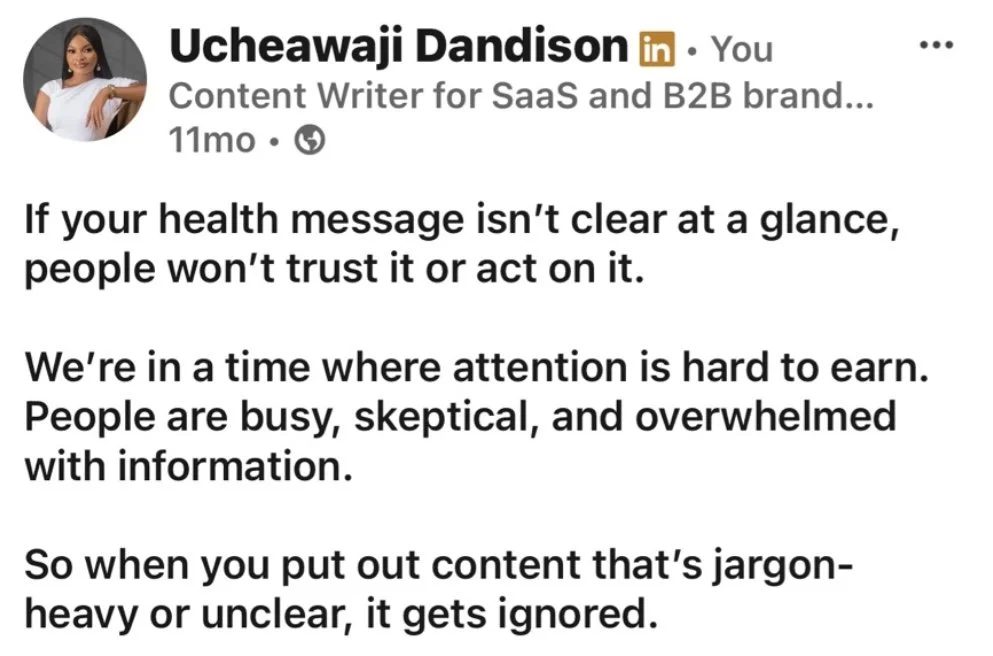
On LinkedIn, I documented my journey as a B2B content writer by sharing what I knew, what I was learning, and practical insights my audience could apply. Consistently showing up made me more visible and led to opportunities I wouldn’t have found otherwise.
Source: LinkedIn
If you’re building your personal brand on LinkedIn, this guide walks you through how to optimize your profile, create content consistently, and position yourself for the right opportunities.
2. Platforms I leveraged
LinkedIn has been my primary platform for building professional relationships and finding opportunities. It’s where many founders, marketers, and executives at B2B companies are active, making it the ideal place to connect with the people I hope to work with.
If you’re planning to pitch clients on LinkedIn, focus on building genuine relationships first. A thoughtful, personalized message will always stand out more than a generic sales pitch.
3. Content types I focused on
I focused on short-form LinkedIn posts, publishing three to four times a week. Most of my content fell into three categories: reflections from my journey, content tips for businesses, and takeaways from projects I was working on. This mix allowed me to document my growth while consistently sharing value with my audience.
Skills that increased my value and income as a B2B content writer
1. SEO writing
Businesses aim to rank for the right intent. That's what SEO is about: matching content to what users are searching for. Are users looking for information, comparing solutions, or ready to buy? By understanding SEO, I was able to create content that readers found useful and clients valued.
2. Content strategy
A content strategy aligns content with specific goals, such as brand awareness, lead generation, and customer retention. Every piece of content should support a goal.
Strategy helped me think beyond writing. It allowed me to contribute meaningfully to marketing efforts. Neil Patel has an excellent beginner’s guide to content strategy if you’d like to explore it further.
3. Research
Before I write anything, I spend more time researching than drafting. My process usually looks like this:
I start by understanding the brief and the content’s goal.
I identify the target audience and what they already know.
I search Reddit, Google, and review sites to understand the questions people are asking in their own words.
I study competitors to identify gaps or opportunities.
I read credible reports, blogs, or documentation to verify facts.
Then I organize my notes before writing the first draft.
This makes it easier to create content that connects better with the audience.
4. Writing content that supports a funnel
Not all content serves the same purpose. Some content introduces potential customers to a brand (awareness), some help them compare solutions (consideration), and other pieces help them make a purchase decision (conversion).
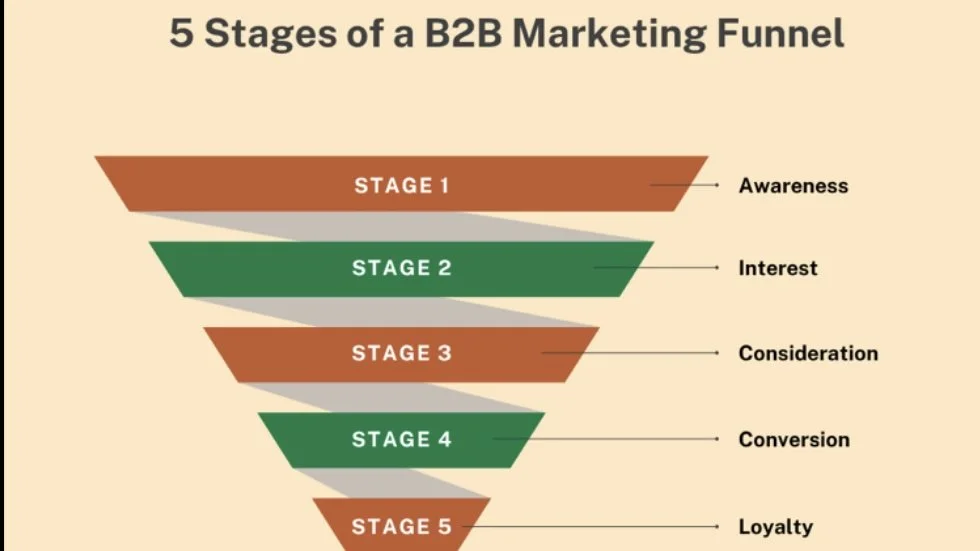
Stages of B2B marketing funnel
Understanding where a piece of content fits within the marketing funnel helped me write with intention. Instead of writing just to fill a content calendar, I was creating content that supported a specific stage of the buyer’s journey and aligned with business goals.
If you’re new to content funnels, HubSpot’s guide to the B2B marketing funnel provides a practical overview of each stage and the types of content that work best within them.
5. Editing
Editing helped me clarify ideas, cut out extra words, and communicate better. In B2B content, clarity matters because unclear messaging and avoidable errors reduce a brand’s credibility. The easier content is to understand, the more likely it is to engage readers and drive action. Read from the lens of three editors on what makes a good B2B content. This will make you self-edit better.
Challenges I encountered and how I navigated them
Getting my first marketing job wasn't the hardest part. Learning to believe I belonged there was. My first year came with a steep learning curve, moments of self-doubt, and skills I had to develop much faster than I expected. These are some of the challenges that almost made me quit and how I worked through them.
1. Transitioning from creative writing to business writing
No one prepared me for what it would feel like to go from creative writing to writing in a technical industry like fintech. There was a lot to catch up with. Industry lingo, regulatory laws, prohibited phrases for finance content. Most times, I ended the workday with a headache. But it got better with time. As I gained experience, I kept improving.
2. Imposter syndrome
I felt like I didn't belong in marketing rooms, even when my work was contributing to real results. Looking back, I was harder on myself than I needed to be. I wasn't unqualified, I was just new to the field.
If you ever feel like you don’t belong, you’re not alone. Michelle Obama has spoken openly about experiencing imposter syndrome despite her accomplishments. Her words remind me that self-doubt isn’t always evidence that you’re in the wrong room.
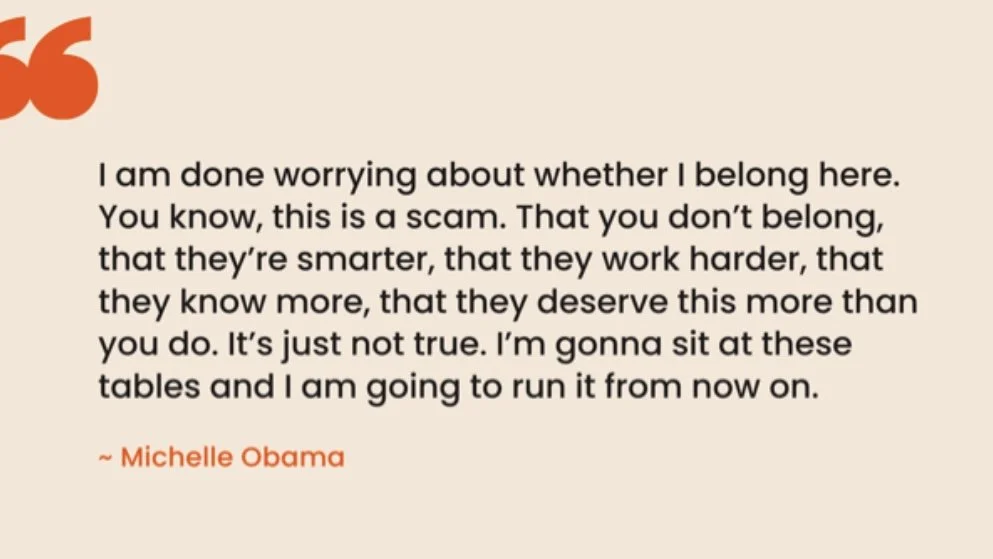
Michelle Obama
3. Burnout
Working in fintech came with its cons. I was burnt out many times. What helped me was learning to set professional boundaries. I stopped carrying work into my personal time and became more intentional about protecting my hours outside work.
4. Wide knowledge gaps
I learned many things on the job. Still, there were knowledge gaps I had to fill myself, especially as marketing trends changed. There was AEO, LLMO, GEO, SEO, and boy was my head spinning. I closed those gaps in bits by learning from blogs, YouTube, LinkedIn, free and paid resources like books and courses.
5. The need for mentorship
I wanted to work closely with a senior editor or content marketer. But I didn’t get the chance to. So I joined the Freelance Coalition for Developing Countries (FCDC). I applied for an 8-week mentorship program and got paired with my amazing mentor, Laura I. Abreu. I learned a lot about marketing and SEO from her. Her guidance improved the quality of my work even after the mentorship.
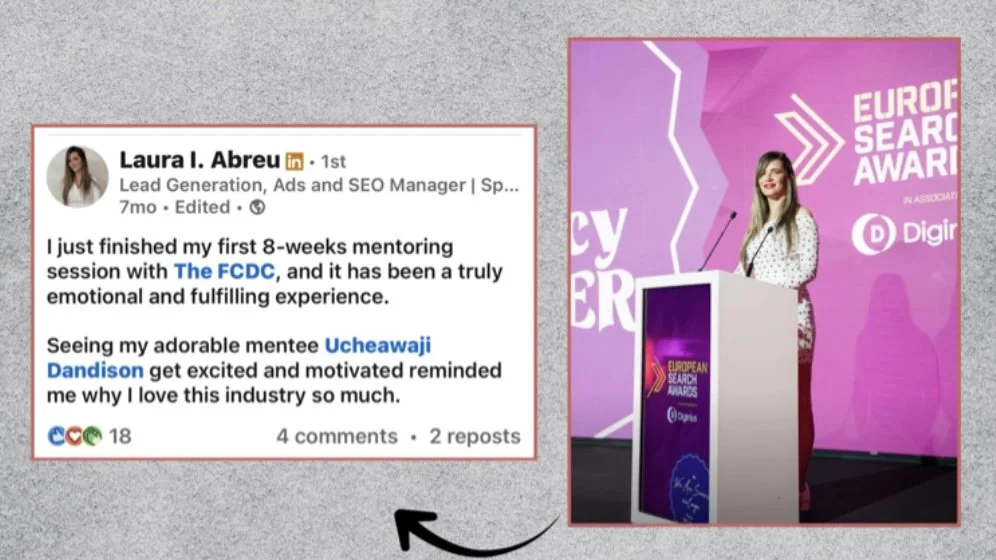
Source: LinkedIn
Other shifts I made
Trusting my own voice (not being afraid to be myself)
I started B2B content writing when AI was the talk of the town. Companies were boasting about replacing their marketing teams and writers with AI. How wonderful.
I didn’t want to compete with AI. I also didn’t want to lose my voice to overly polished edits. So, I chose to let my personality and unique perspective shine through my writing. My mentor, Laura, strongly encouraged this. I discovered that people wanted content that feels human but still delivers results. I had that, and I leaned into it. I haven't regretted it since.
Finding my community
In my early days, I often felt alone. I began searching for other marketers to connect with and learn from. I joined FCDC and found my first marketing mentor. Later, another content marketer introduced me to Smarketers Hub. I also connected with other marketers on LinkedIn and built meaningful relationships.
Niched down after I gained clarity, not before
Nothing drove me as crazy as the “niche down” advice in my first year. I disliked the idea at first because I considered myself versatile, and I couldn't imagine boxing myself in.
As my career evolved, I came to understand niching down as choosing a category you want to serve, not limiting yourself to one thing forever. I write for SaaS and B2B brands. Within that umbrella, I have the freedom to work for industries like fintech, marketing and healthcare. I don't have to choose one over the other, at least not yet.
How to build your B2B content writing career in 12 months: a practical blueprint
By the end of my first year, I had landed a good one-off gig, worked with three companies at different points, and built a steady income stream from writing.
If you're starting from scratch or looking to pivot into B2B content writing, here's the roadmap I'd follow if I had to do it all over again.
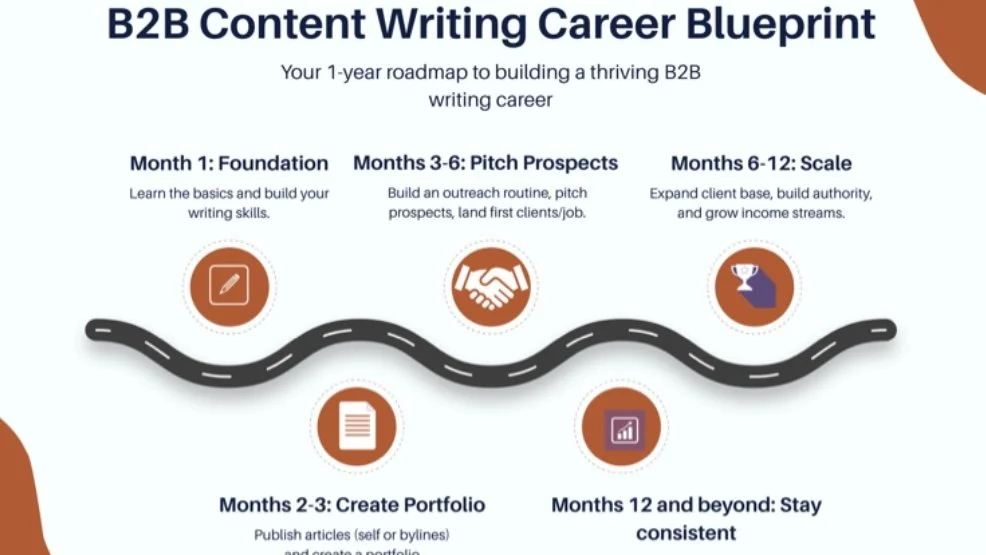
B2B content writing blueprint
Phase 1: Learn the fundamentals (Month 1)
Before you worry about portfolios and clients, learn the basics. Know how businesses use content to attract, nurture, and convert customers. Then build a foundational understanding of SEO. It serves as the basis for modern strategies such as AEO, GEO and writing for LLMs.
At this stage, your goal is literacy. Spend time reading blogs from companies you admire and industries you’d like to write for. Notice how they organise content, clarify ideas, and lead readers to take action. You will grow faster once you treat content as a business tool rather than a writing exercise.
Phase 2: Create proof of work (Months 2–3)
Most beginners spend too much time learning and not enough creating. You can build a portfolio without a client. Write three strong samples in an industry you're interested in. These could be blog posts, case studies, comparison articles, or thought leadership pieces. Focus on quality over quantity.
Next, create a simple portfolio and optimize your LinkedIn profile to attract the opportunities you want. Clients can't hire you for skills they can't see.
Phase 3: Pitch your first clients (Months 3–6)
Once you have proof of work, start putting yourself out there. Reach out to companies, founders, agencies, and marketing teams. Build a simple outreach routine and stick to it. Most opportunities won't come from a single message. They'll come from consistency.
You may find it helpful to read B2B writer Oyinkasola’s blog post on finding clients as a freelancer. Also, join communities where marketers and writers converge. Sometimes they share job opportunities within these hubs.
Don't underestimate referrals either. Good work has a way of travelling. Your goal during this phase isn't perfection, but to get hands-on experience.
Phase 4: Build consistency (Months 6–12)
Once you've landed your first opportunities, focus on building a sustainable career. Look for opportunities to secure recurring work or retainers. Keep improving your skills and start paying attention to the industries and projects you enjoy most.
This is also the time to build authority. Share what you're learning on LinkedIn, X or Instagram. Document your journey and join conversations in your field. You don't need to be an expert to have a voice. You simply need to be one step ahead of the person you're helping.
By the end of your first year, you may not have everything figured out. I certainly didn't. If you've gained valuable skills, proof of work, visibility, and practical experience, you're further ahead than you realise.
Final thoughts
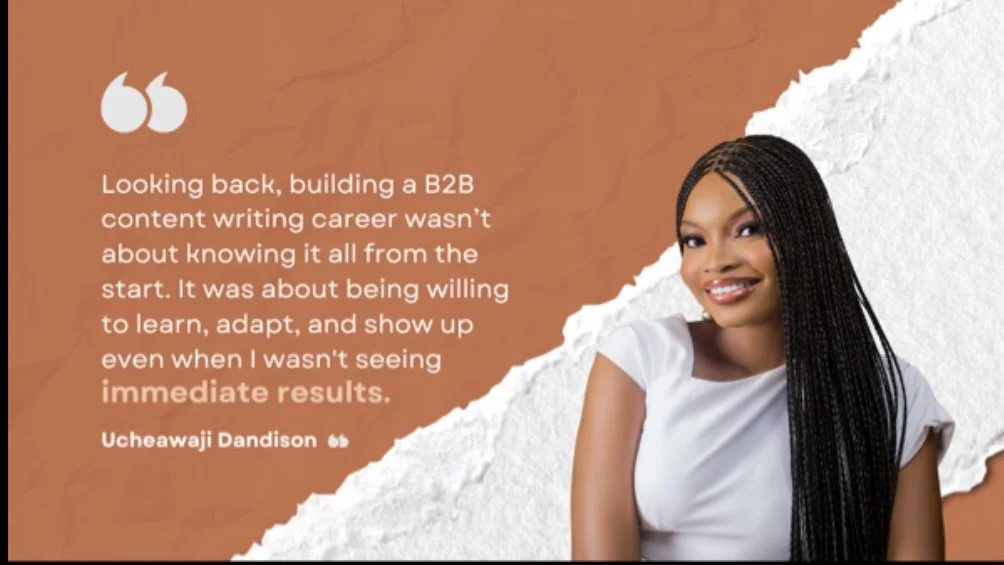
Ucheawaji Dandison
If I had to start my first year all over again, I'd spend less time doubting myself and more time creating. I'd create strong writing samples. I'd learn marketing basics. I'd share my work, even if I didn’t feel ready. Those three things opened more doors for me than any course, certificate, or productivity tip could.
Looking back, building a B2B content writing career wasn’t about knowing it all from the start. It was about being willing to learn, adapt, and show up even when I wasn't seeing immediate results.
If you're in your early years as a marketer, give yourself permission to be a beginner. You don't need to know everything today. You just need to keep learning, creating, and putting your work in front of people. A year from now, you'll be surprised by how far consistency can take you.
B2B content writing FAQs
1. How do I start B2B content writing with no experience?
Start by learning the fundamentals of content marketing, SEO, and content writing. Create strong writing samples in an industry you like. Then, showcase them in a portfolio. You don't need clients to get started, but you do need proof that you can write.
2. How long does it take to become a B2B content writer?
There's no fixed timeline. Some writers land their first opportunity in a few months. Others take more time. What matters most is how often you learn, create content, and put yourself in front of potential employers or clients.
3. What should be in a B2B content writing portfolio?
A strong portfolio should have 3-5 quality samples. These should show your writing skills for businesses. These can be blog posts, case studies, landing pages, email campaigns, or thought leadership articles. Focus on quality and relevance rather than quantity.
4. How do B2B content writers find clients?
B2B content writers find clients in several ways. They leverage personal branding, referrals, communities and cold outreaches. Job boards and social platforms like LinkedIn help, too.
5. What skills do you need to succeed in B2B content marketing?
Strong writing skills are important, but they're not enough. Successful B2B content writers understand SEO, content strategy, audience research, marketing funnels, and business objectives. The more you understand how content drives results, the more valuable you become.
6. How much should a beginner B2B content writer charge?
There isn't a universal rate for beginner writers. Pricing depends on your experience, niche, and the complexity of the work. Focus on building skills, proof of work, and credibility. Higher rates become much easier to justify when you can show value.